Cymatophone
This page contains information about Cymatophone, a proposed Noisy Toys installation designed by S.Summers. The page is not currently available through the main menu and is for events and organisations that may be interested in booking or supporting the Cymatohone.
Short Summary
An interactive sound and cymatics installation inspired by the work of Megan Watts Hughes. A multi-sensory experience of harmony, dissonant throb to harmonious resolution. Spectral patterns of laser light dance to pulsing bass. Visitors use their voices or simple interfaces to control the sounds, finding consonance and dissonance; seeing, hearing and feeling the tension and release as waves synchronise.
Concept
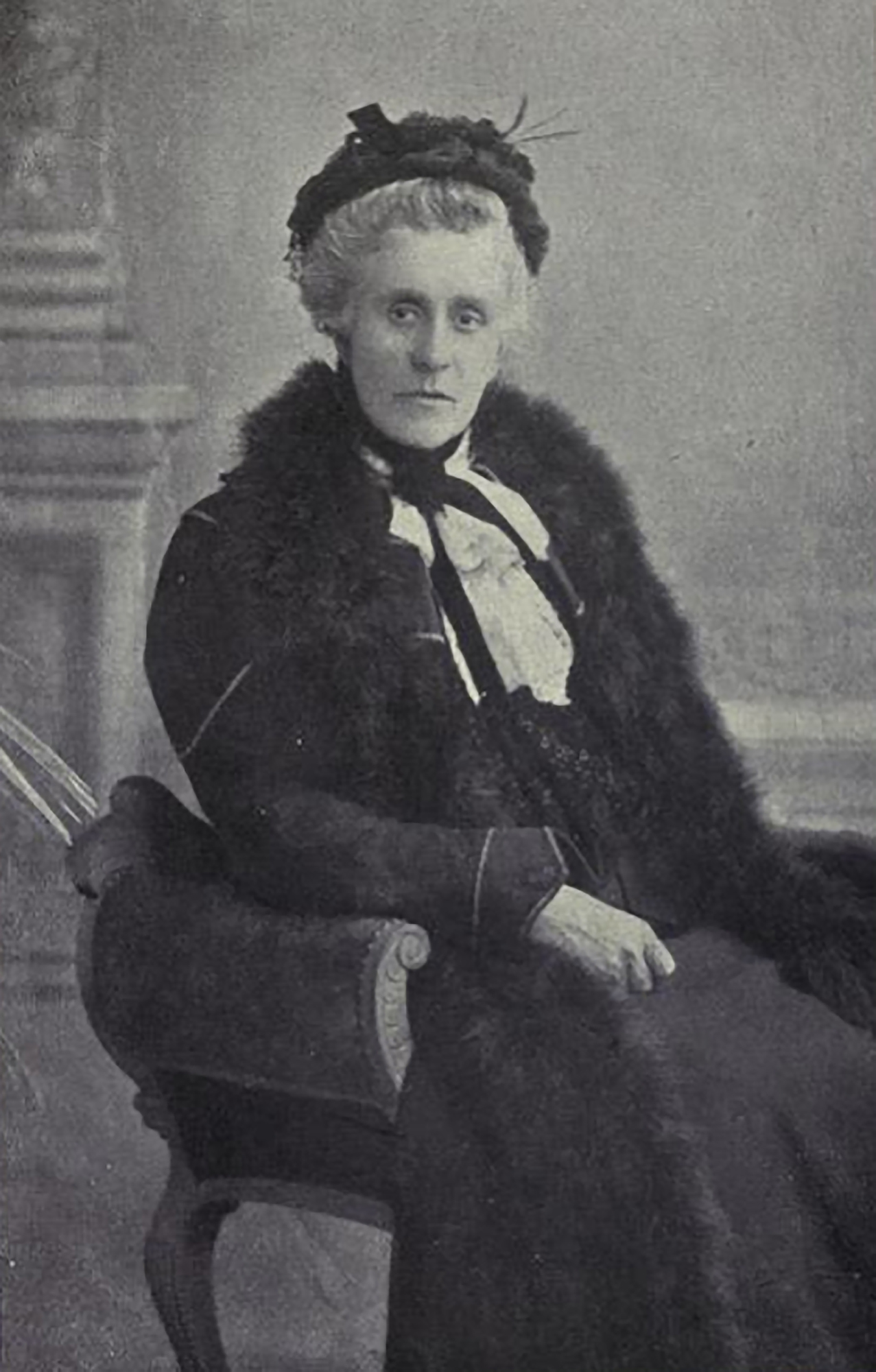
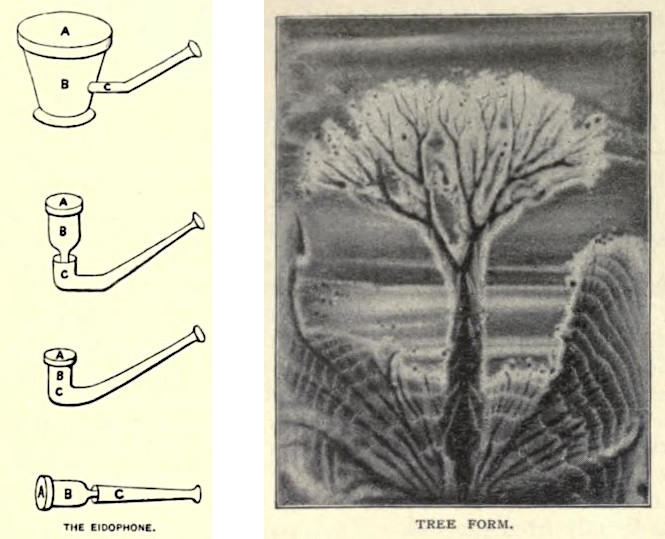
Cymatophone is a development of the research of 19th Century Welsh singer and scientist Megan Watts Hughes; her pioneering work in cymatics, and her invention, the ‘Eidaphone’, which enabled the visualisation of sound waves (Cymatics), and the reproduction of the images. The Eidaphone is both a musical and scientific instrument, and one which encourages interaction and experimentation. This makes it, and Megan herself, perfect inspiration for a Noisy Toys installation.
This project will draw on our extensive experience designing interactive installations that combine outdoors arts with science communication, as well as our own work with cymatics demonstrations and activities.
A lot of public work around cymatics tends to lean towards mystical or therapeutic interpretations of the patterns of sound. We will avoid this completely, and focus instead on the intrinsic beauty of the patterns generated, and their potential to fascinate, educate, and encourage interaction.
Harmony
A familiar and accessible concept; harmony gives us emotional reactions to music, and is a word that is analogous to feeling relaxed and comfortable with other people or in a situation.
However, in musical theory, harmony also includes dissonance.
Eidophone
The original Eidophone produced patterns on a vibrating membrane when sung into. By applying inked glass plates, images were captured that caught the public imagination at the time, and still fascinate today. This is a very delicate process, not suited to a participatory public installation.
Cymatophone
Will use various adaptations of the original design to enable anyone to experiment with producing cymatic patterns with their voice, or with controllers if preferred. Some of our designs will also build on existing Noisy Toys interactive features, such as tactile experience of low bass.
The visitor experience
Visitors enter a dark space, filled with slowly pulsing deep bass tones and flickering patterns of projected light, always in motion, synchronous to the spectral properties of the sounds. The bass tones will be dissonant at times (the spectral projections jump erratically), before resolving into consonance, (smooth laminar patterns). Powerful low bass will give a physical as well as an auditory experience of the pulsing dissonance and the harmonic resolution of waves in and out of synchronisation, matched by the laser light.
This will be the base-level state of Flutter, before any visitor interactions or musical inputs.
Megan
A costumed performer will oversee the space in the role of Megan herself, assisted by a technician. This is an optional addition to the installation which will give the historical account of this exceptional innovator.
Participation
To interact with the installation visitors can sing or vocalise into voice tubes, or they can use simple sound-control interfaces if preferred.
The resulting sound waves will be used to generate cymatic patterns which are projected onto the walls of the space. This process is entirely analogue and mechanical; no digital processing or pattern-generation is used.
Two or more visitors can combine their voices, to experiment with the auditory and visual effects of harmony. Voice can also be combined with a fixed tone, or sound controllers can be combined. Bass Drives (made from hacked hard drives) will also be used to generate sweeping bass tones. Visitors can switch between different sound inputs. Tactile sensation of the sounds gives another sensory way to experience harmony.
The Sound
Very simple low bass sine tones will set the fundamental key tone (which will change at times), with vocal and other audio inputs compared to this fundamental pitch. The sound will not be overpowering, but will use very low bass to give a physical sensation of dissonance and resolution, which will match what is seen.
Musical Performance
As well as a fully interactive experience, the installation can be used as a unique addition to live musical performances. This would only suit some performances, with a dark space being required.