Scavenger Workshops
Learning about electricity and sound.
Hands-on noisy activities using e-waste, building circuits.
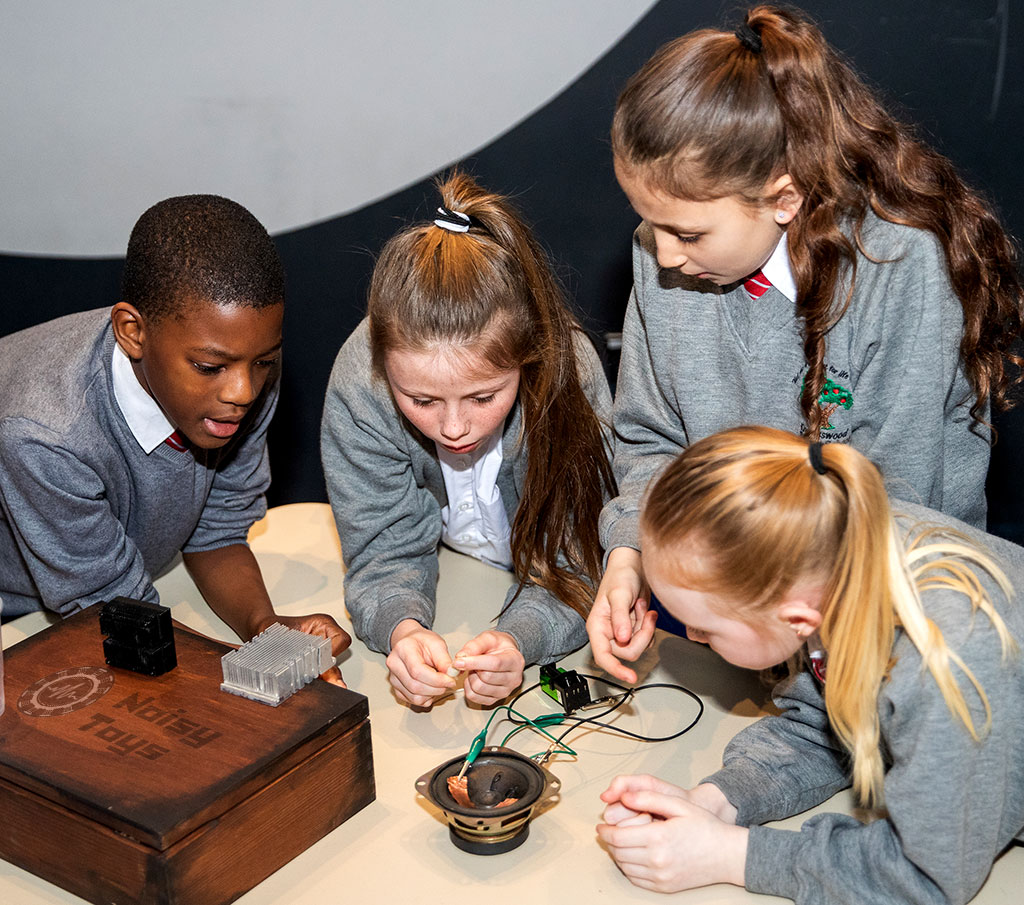
Participants: 35 / whole class
(or more with an extra leader or suitable support from school staff)
Duration: 60-90 minutes
(per workshop; can be shorter or longer with both workshops combined)
STEM topics:
Circuit Scavengers:
Scavenger Sounds:
National Curriculum
The Workshops
There are two Scavenger Workshops for KS2 and KS3, which contain related activities. They can both be combined in a longer ‘Scavengers’ workshop of 90-120 minutes
Circuit Scavengers
Focusses on circuits and the electrical and magnetic forces.
Scavenger Sounds
Focusses on sound vibrations
Learning Objectives
- Electrical circuits: components, faults, short-circuits, connections
- Electrical conductivity & resistance, current, charges, polarity
- How to be safe with electricity
- How speakers work (electromagnetism)
- Raising awareness of issues around disposable electronics and waste
- History of science
Learning Objectives
- Sound vibrations
- materials and properties
- Waves; longitudinal & transverse, frequency, amplitude
- How speakers work (electromagnetism)
- amplification & microphones
- acoustic properties of materials
- Raising awareness of issues around disposable electronics and waste
- History of science
The workshops
Starter: Both workshops start with the Nose Test , a whole-class conductivity experiment. We test various materials (including noses) for conductivity, and the participants receive a ‘Nose Tested’ stamp on their hands.
- Current flow and electrical circuits
- Conductivity and resistance of materials
- Variable resistance used for control
- Switches, broken connections and short circuits
- working scientifically